
Building Mood Tracker: Increasing Retention by 5% and Boosting Meditation Playback by 23% through Mood Personalization
Riliv is a mobile app that helps users improve their mental health through meditation, counseling, and articles. While the app had strong install numbers and solid daily traffic, the Retention Rate remained low. Most users only engaged reactively—turning to meditation when stressed, but not building consistent usage habits. We needed a daily-use feature that felt light, personal, and meaningful without overwhelming users.
We designed Mood Tracker as a daily ritual that connects self-awareness to action, transforming one-time visitors into emotionally invested regulars.

Disclaimer: This is a high-level project overview. For the full case study or more details, feel free to reach out at olehabib98@gmail.com.
Key Challenges
Riliv’s mental health tools were powerful—but underused. Users needed something easier to build consistency.
- 01
How might we create a lightweight daily feature that keeps users emotionally engaged?
- 02
How can we help users track emotions without making them feel judged or overwhelmed?
- 03
How can we naturally bridge mood insights into increased meditation usage?
- 04
How do we validate usefulness and adoption without overbuilding?
- 05
How can we design with long-term retention in mind, not just short-term novelty?
Design Process
- 01Align Business Goals
- 02Interview Users
- 03Define Success Metrics
- 04Brainstorm & RICE Prioritization
- 05Rapid Concept Validation via FGD
- 06Mood and Emotion Mapping
- 07Design Interface
- 08Usability Testing
- 09Prioritized MVP Launch
- 10Post-Launch Analysis & Iteration
Key strategy
We built Mood Tracker to be a daily emotional touchpoint—simple, reflective, and seamlessly connected to meditation—so users return not out of obligation, but self-awareness.
Key Solutions
- 01
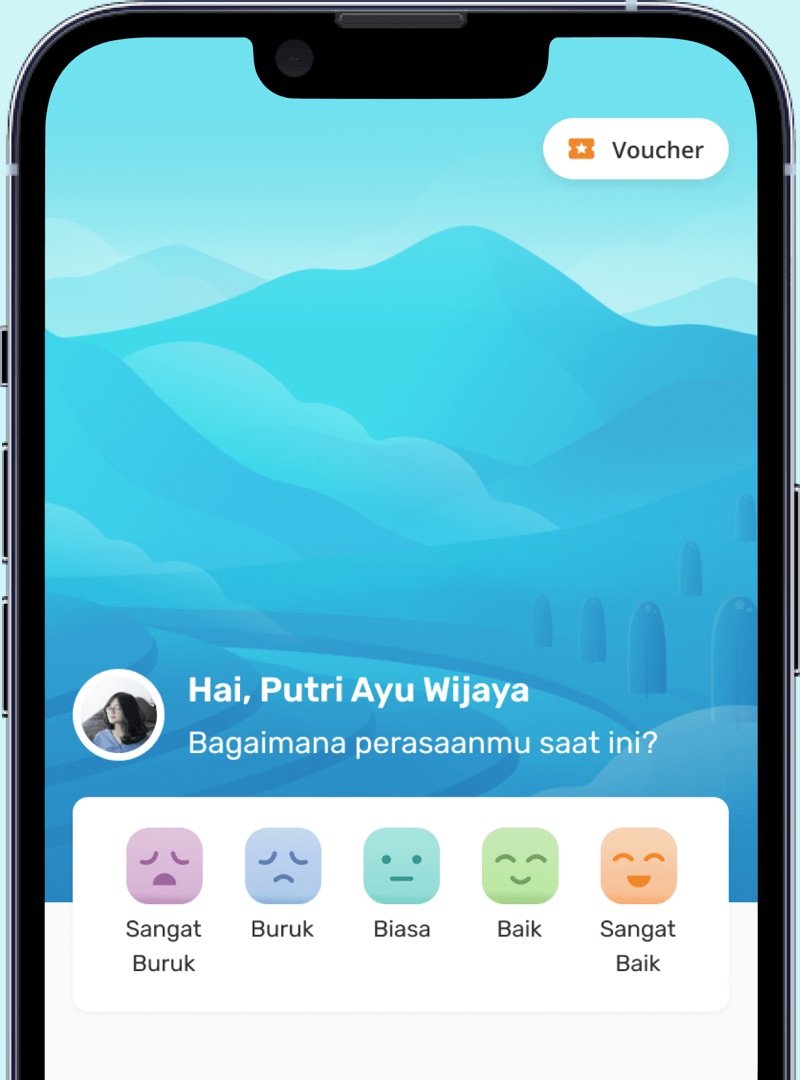
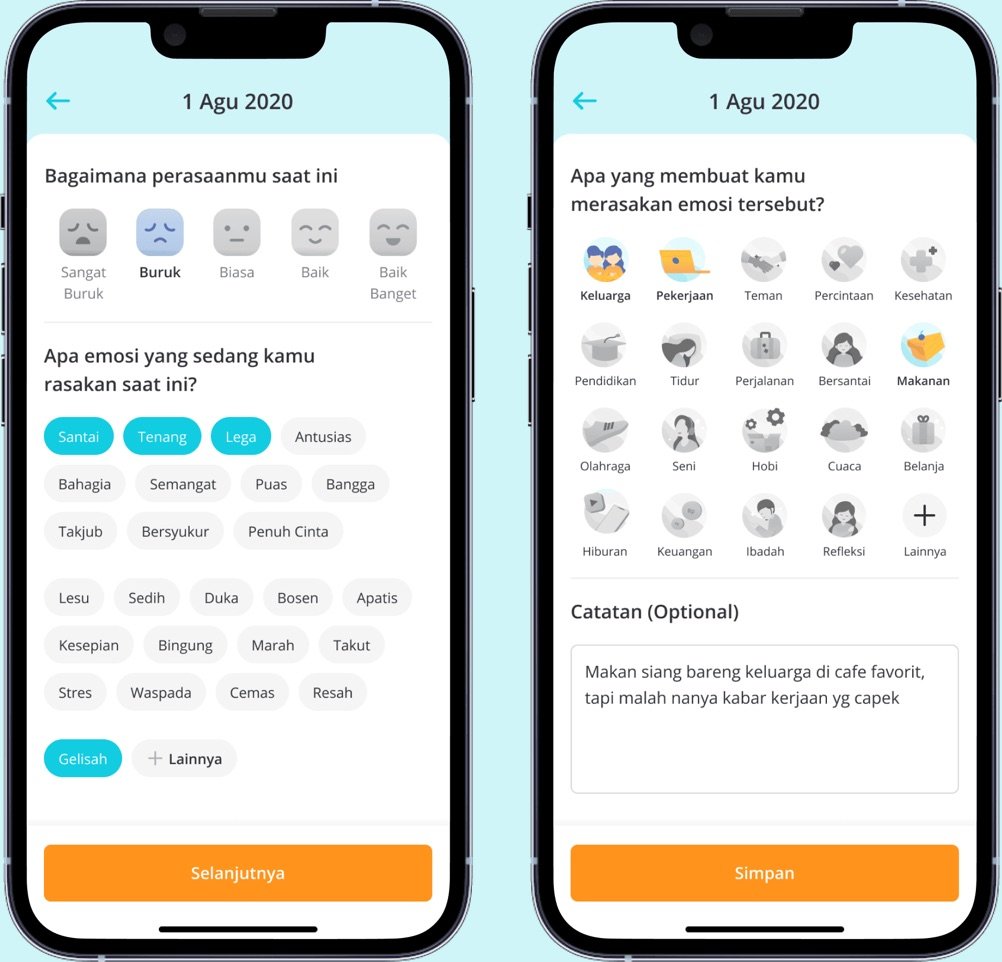
Mood & Emotion Tracking
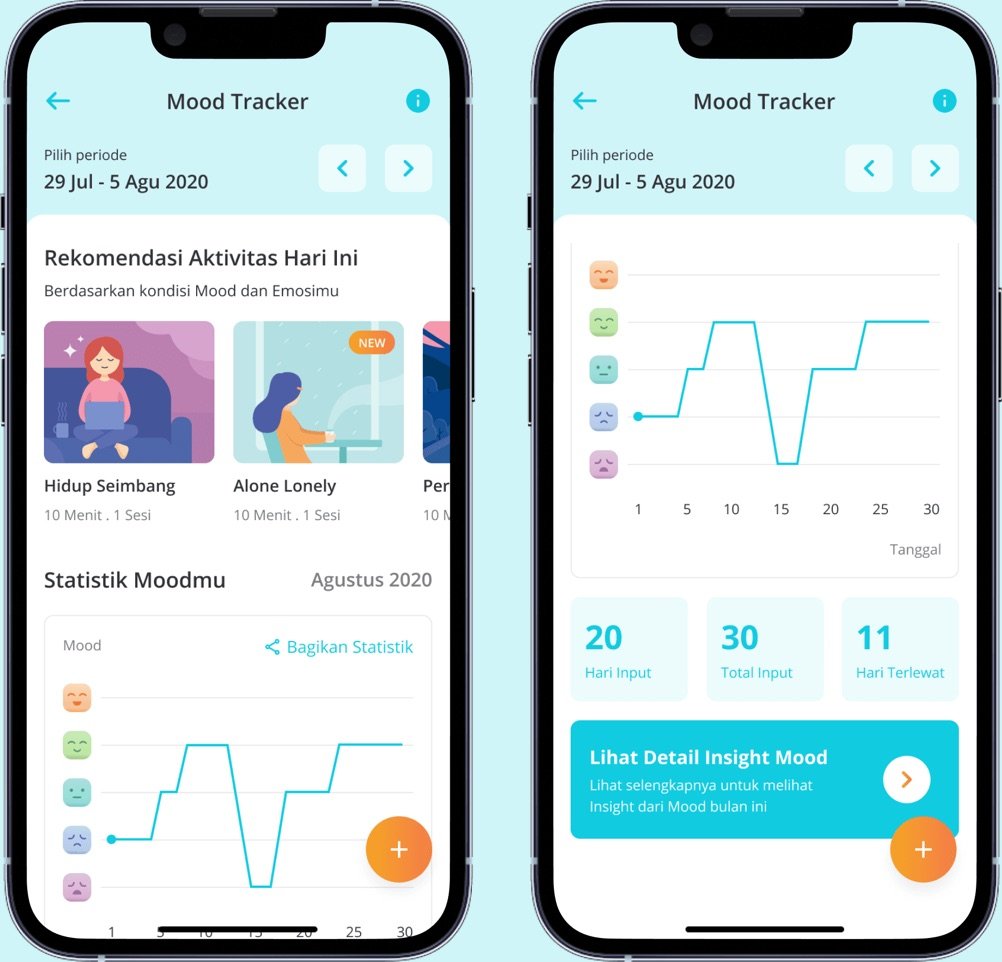
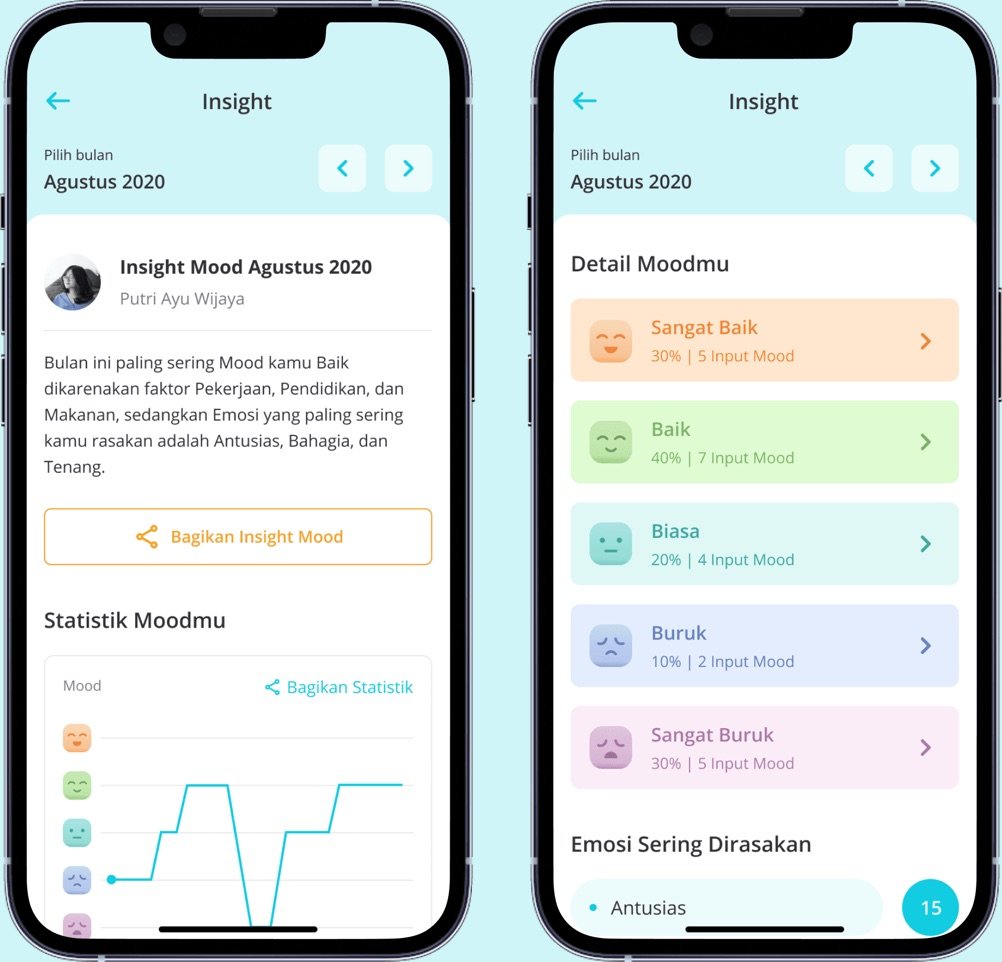
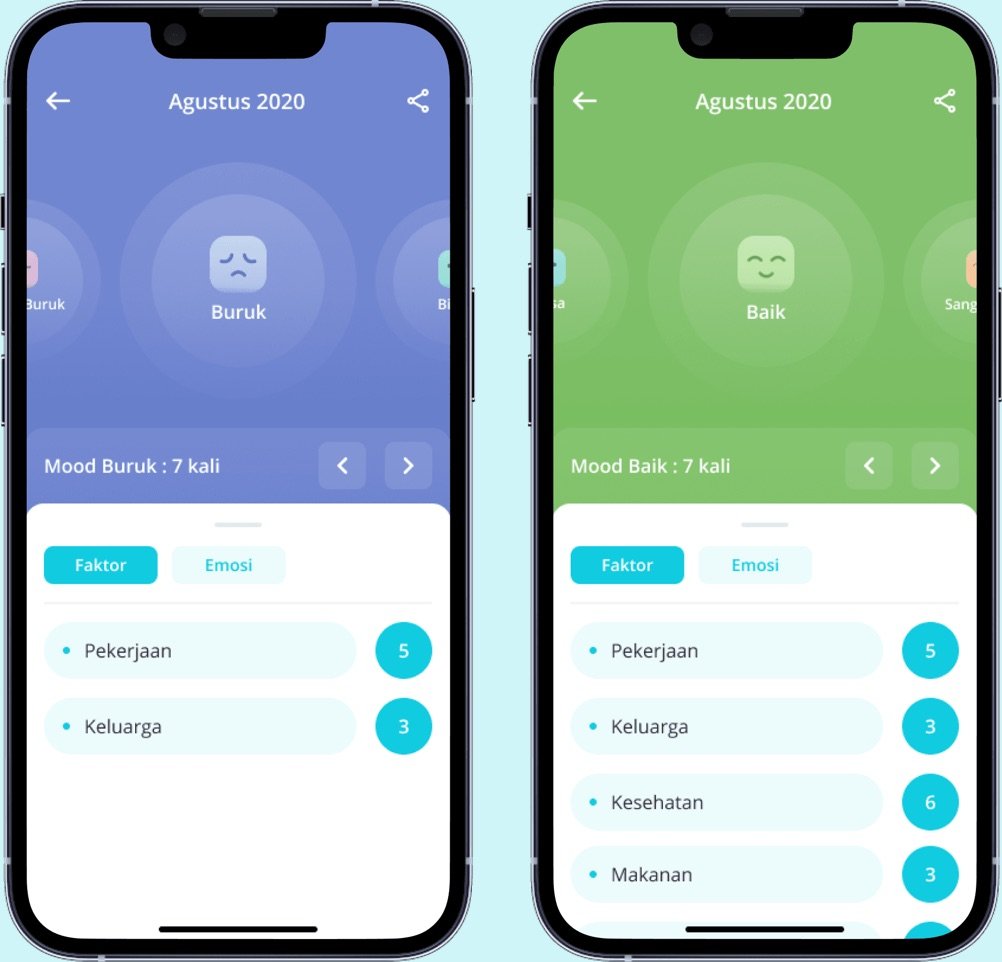
Split mood & emotion into distinct inputs—simple 5-point moods and a broader list of feelings—so users could reflect without overthinking.
- 02
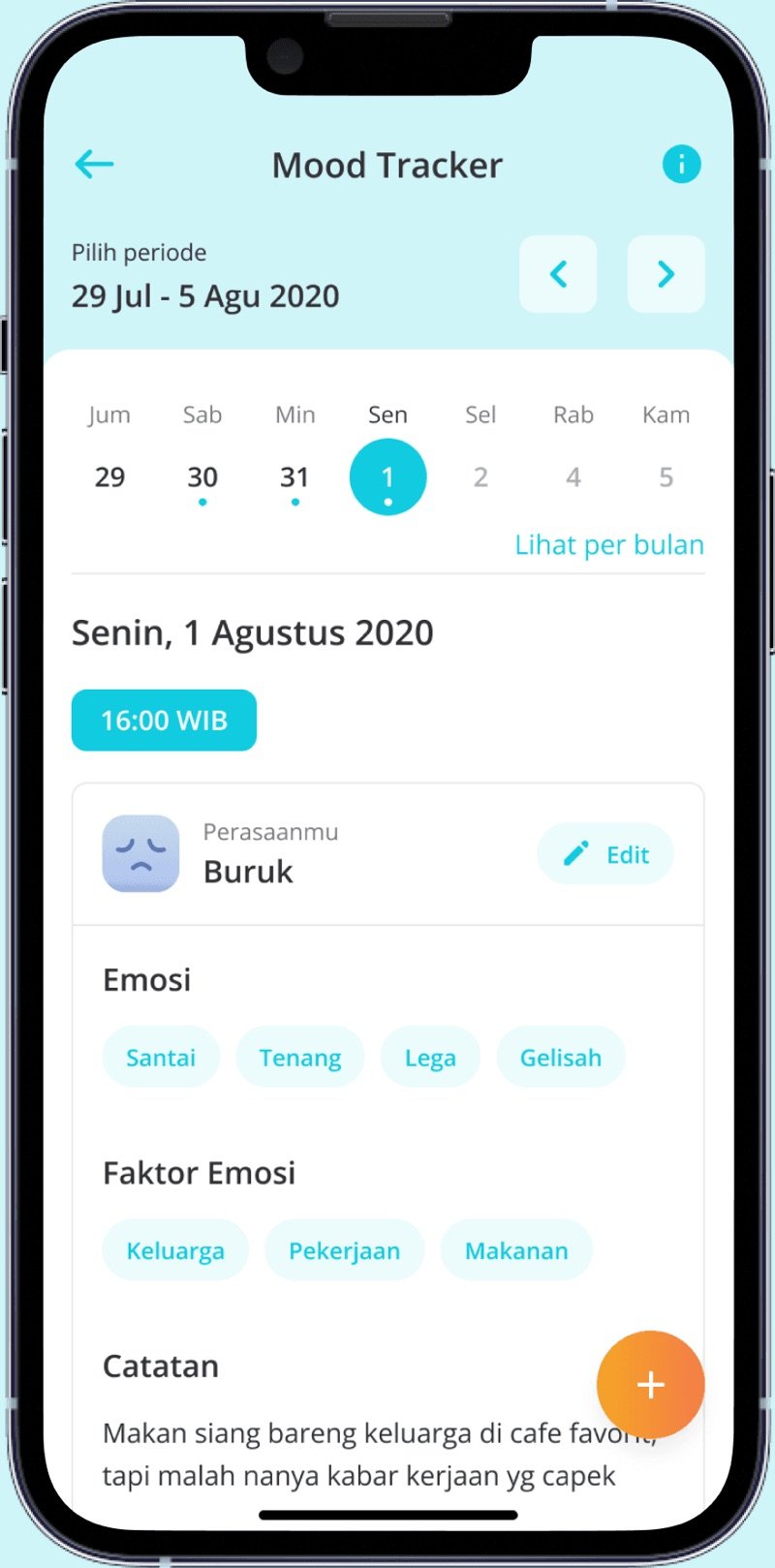
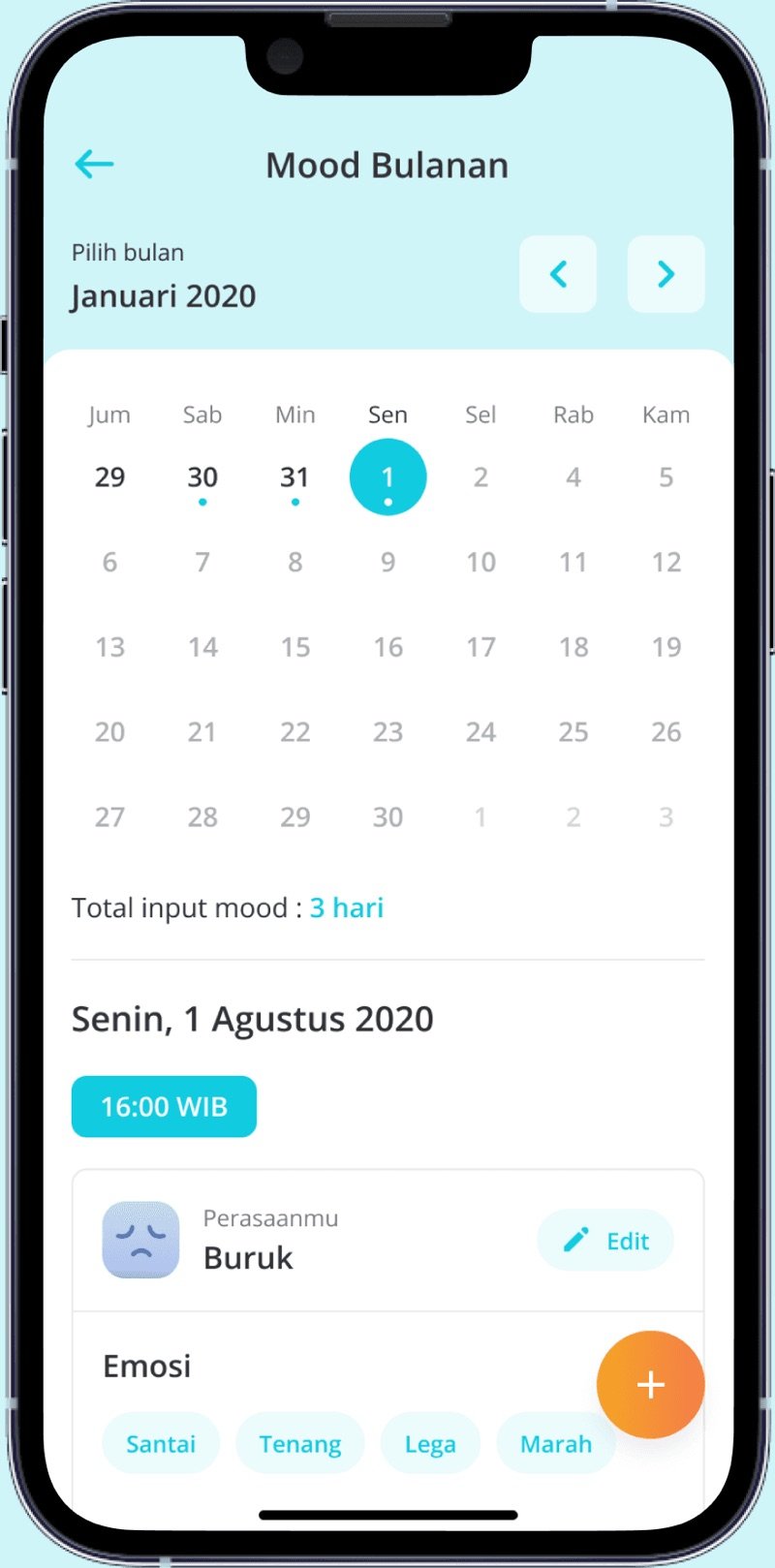
Progress Feedback & Sharing
Added a monthly chart to help users see mood trends and share their progress on socmed, boosting awareness and emotional ownership.
- 03
Tight Meditation Integration
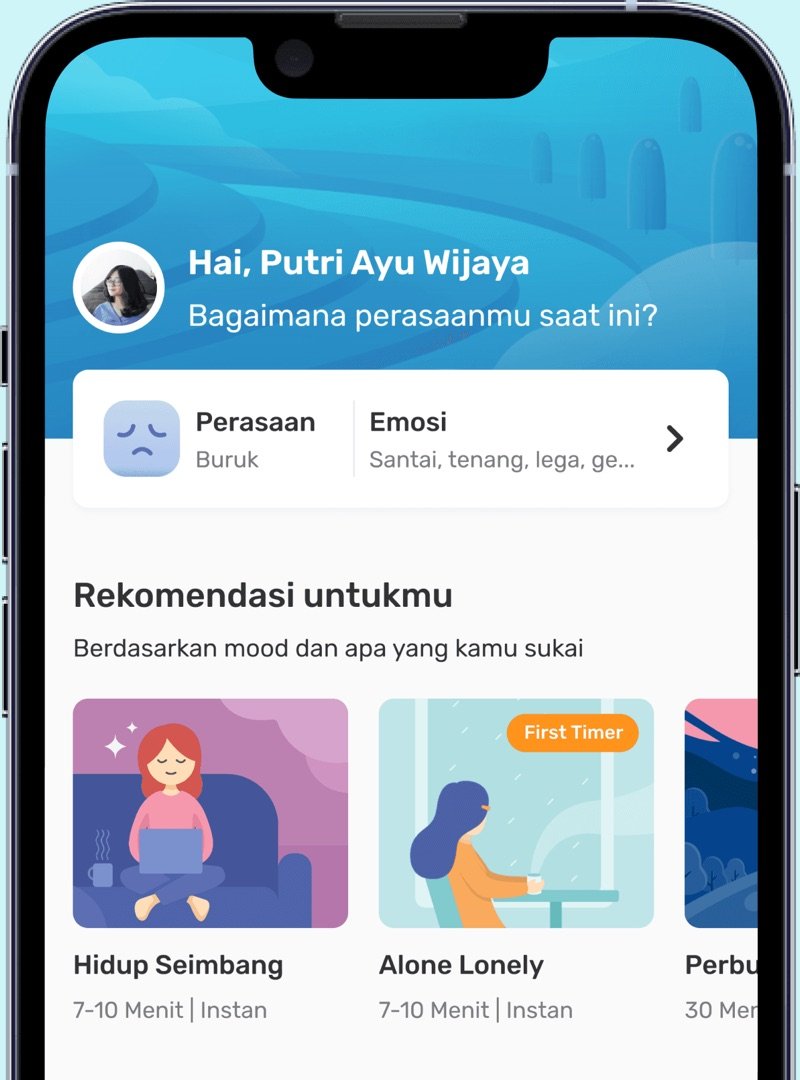
Connected mood input to meditation recommendations in real time. Users instantly saw how their input shaped their self-care.
- 04
Placement Optimization
After launch, we moved Mood Tracker to the top of the Home screen to boost discoverability and reinforce daily check-in behavior.
- 05
Fast MVP Launch
Focused on simplicity for the first version, with just enough polish to validate value quickly through real usage, not just prototypes.
Outcome Highlights
Based on 2020 data
-
Retention Boost
Push reminder was perceived positively. While exact impact on retention isn’t fully trackable, early data showed increased re-engagement patterns.
-
Daily Usage Rate
Mood Tracker used by 36.24% of all daily active users — clear evidence of early habit formation.
-
Personalization Payoff
Meditation playback increased 23% through the home page’s recommended section, validating the mood-based meditation link.
Collaborator
- Product Manager (Novia)
- Psychology Specialist (Geby & team)
- CBO (Audy)
- Tech Team